

The Art of Working with Japanese Engineers
Strategies for Successful Cross-Cultural Collaboration
At some point in our history, our population expanded to be large enough to develop a society, and our survivability became dependent on that regional society. While animals slowly adapt themselves to nature, we humans adapt a complicated society in order to live. Our brain has to process a tremendous amount of information to find the best behavior to be accepted and to become a member of society. We had to have the wisdom to stay alive.
Because our brain is not ready to handle such an incredible amount of information, we invented something called “philosophy.” Philosophy allows our brain to work within comfortable boundaries in order to avoid endless thought processes.
Once such a philosophy has developed, people tend to stay within that unique comfortable playground because many answers are either ready to use or shortcuts are available to obtain answers.

The ancient Greek region developed a certain philosophy that was adopted by its people and passed down from generation to generation. Scholastic philosophy, which basically reclaimed ancient Greek philosophy in the early Middle Ages, effectively formed the foundation for most Western society’s ways of thinking. This foundation continues and has become the base of Western people’s thinking. Some of the critical ideas of that philosophy are, “People are all different.” “Nature and human beings are completely separate things.” “To find answers, people must bring forward their own ideas that differ from one another. The idea with the most logical explanation becomes an effective answer.”
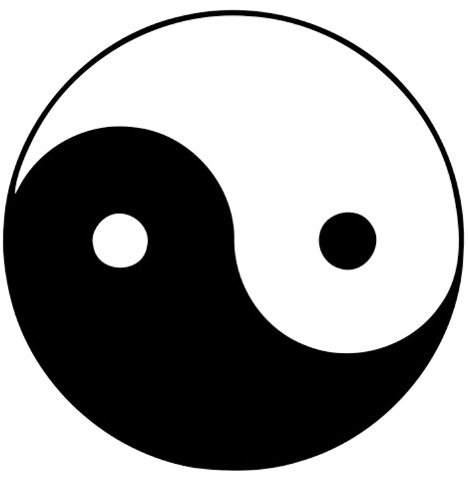
At the same time, a philosophy called “Tao” was developed in an ancient Asian region. It spread throughout Eastern societies, especially among Chinese, Korean, and Japanese people. Tao philosophy teaches that “People and nature share the world together, so human beings are a part of nature,” and that “All people share the same fundamental, nature-driven mind and thought.” “The center of black is white, and the center of white is black.” “Black and white are continuously connected to each other.”
The first Japanese constitution, called the Seventeen Articles, was issued by a famous prince, Shotoku, in the 7th century. It clearly followed Tao teachings. Some of the articles are as follows:

Article #1: “Harmony should be valued, and quarrels should be avoided.”
Article#8: “Ministers and officials should attend the Court early in the morning and retire late”
Article#10: “Let us follow the majority and act like them.”
Article#17: “Decisions on important matters should be discussed with many people. So as to arrive at the right conclusion”
It seems to align with the behavior of today’s Japanese engineers.
You can easily imagine that both Western and Eastern cultures were passing these ancient philosophies down until around 150 years ago. Although we have exponentially expanded our diversity during the last 150 years, that still represents only four to five generational steps. Both Western and Eastern people are still handing them down from generation to generation.
That leads people of Western origin, like most of us, to have unique characteristics such as:
Understanding that all people think differently. Being good at strategically reading people’s minds. Exploring many possibilities. Viewing debate not as a fight but as a tool to extract the correct answer. Seeing rules as guidelines, where doing the right thing is important.
On the other hand, people of Eastern origin, like Japanese engineers, have unique characteristics such as:
Believing that all people share the same thinking in their deeper minds. Not being very good at reading people’s minds. Believing things are predefined by nature, therefore ideas are finite. Seeing debate as a fight. Using harmony as the tool to pull out an answer. Believing rules exist for everyone’s benefit. Believing doing things right is important.
The pages of this site talk about more specific aspects of Japanese engineers’ behaviors and the reasons behind them.
From my experience, unfortunately, there is no such magic thing called “effective communication.” Instead, you need to understand where they are coming from, then find a strategic approach—which Western people are supposed to be good at—and then guide Japanese engineers onto the pathway you want to take. I am sure they will follow you.
Empowering Engineers Through Cross-Cultural Collaboration
Our professional team combines expertise from the US and Japan, fostering innovation and excellence in every project. We believe in the power of Cross-Cultual collaboration to drive success and create impactful solutions.

Key Features of Our Team
- Expertise in diverse engineering fields.
- Strong focus on cross-cultural teamwork.
- Commitment to continuous learning and development.
- Innovative solutions tailored to client needs.
- Access to a global network of professionals.
Our Commitment to Cross-Cultural Engineering Excellence
At our company, we pride ourselves on fostering a collaborative environment where US engineers work seamlessly with their Japanese counterparts. This partnership not only enhances our engineering capabilities but also enriches our cultural understanding, leading to innovative solutions that meet diverse client needs.
Our engineering team is composed of highly skilled professionals dedicated to excellence. By integrating diverse perspectives from both American and Japanese engineers, we create a dynamic workplace that encourages creativity and problem-solving, ensuring that we stay at the forefront of technology and engineering advancements.
We believe that collaboration is key to success in today’s global market. Our unique approach combines the strengths of both cultures, allowing us to tackle complex engineering challenges effectively. This synergy not only benefits our projects but also contributes to the personal and professional growth of our team members.
As we continue to expand our operations, we remain committed to supporting our engineers through ongoing training and development. By investing in our team, we ensure that they are equipped with the latest skills and knowledge, enabling them to thrive in a competitive landscape and deliver exceptional results.